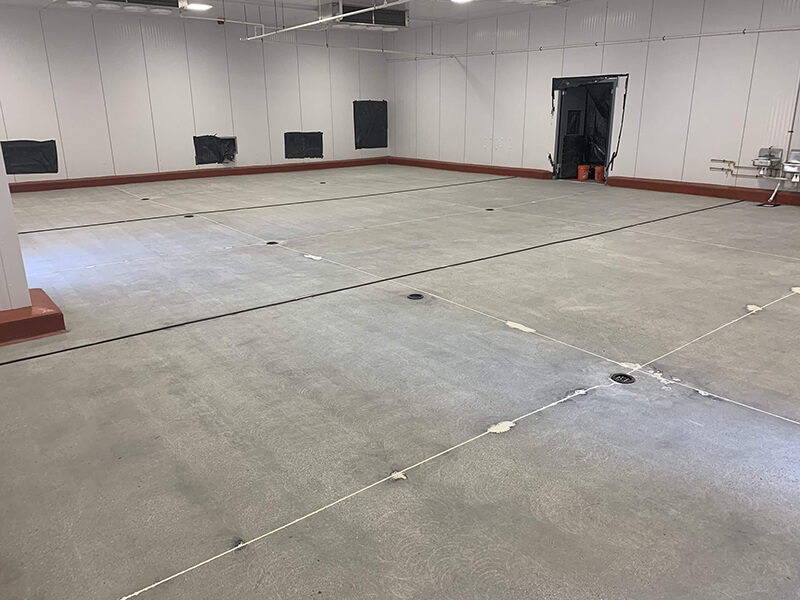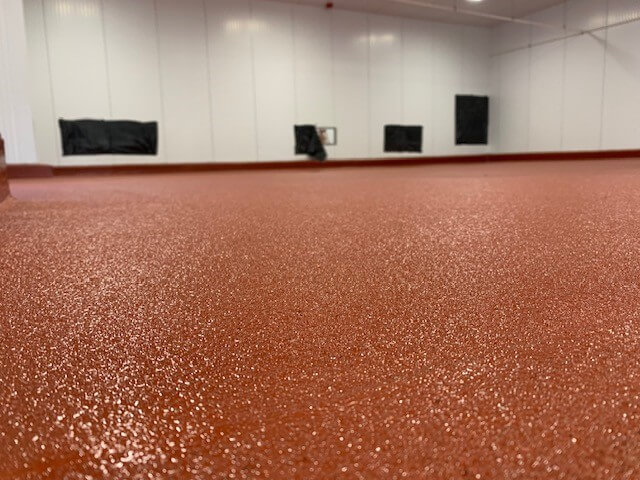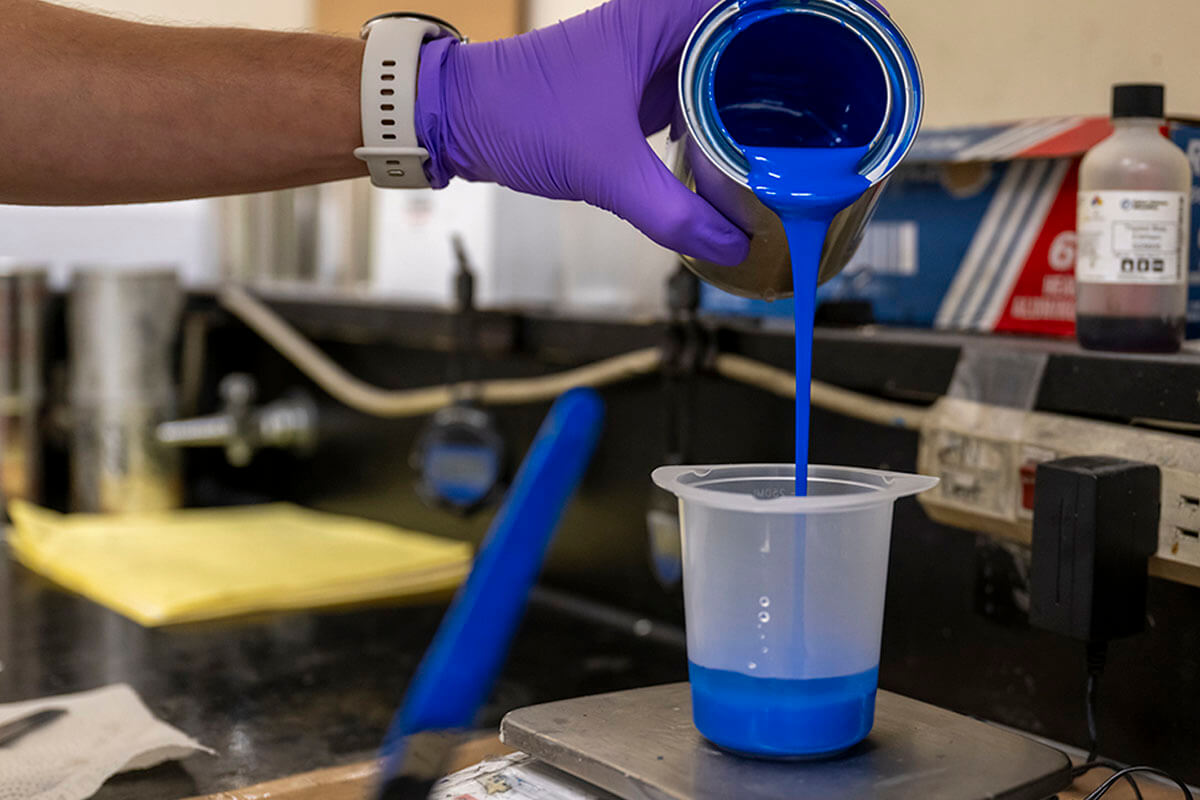
Urethane cement (also called urethane cementitious or urethane concrete) is a hybrid flooring material that combines polyurethane chemistry with cementitious aggregate. Polyset’s Ply-Guard UC (SL) creates an extremely durable, chemically resistant, and fast-curing floor system used in demanding industrial, commercial, and healthcare environments.
Primary Benefits
- Longevity and lifecycle cost savings: Durable performance reduces frequency of repairs and downtime, lowering total cost of ownership compared with many conventional coatings.
- Chemical and corrosion protection: Protects substrate and equipment areas from chemical attack, spills, and corrosion—ideal for manufacturing, labs, food processing, and chemical plants.
- Fast project turnaround: Rapid cure and quick return-to-service minimize production interruptions and labor costs.
- Moisture tolerance and substrate versatility: Better tolerance for residual concrete moisture compared with solvent-borne systems; bonds to properly prepared concrete, old coatings, and some metals with appropriate primers.
- Thermal and mechanical resilience: Handles thermal cycling, heavy forklift/traffic loads, and impact better than many polymer-only coatings.
- Hygiene and sanitation: Seamless, coveable installations reduce harborages for bacteria and simplify cleaning—useful in hospitals, clean rooms, and food facilities.
- Safety customization: Can incorporate slip-resistant aggregates, color coding, and delineation markings for traffic flow, safety zones, and repair patches.
- Environmental and worker safety: Low-VOC options and low-odor formulations reduce exposure risks and regulatory concerns during application.
Key Features
- Chemistry: Two-component polyurethane binder blended with graded aggregates and cementitious fillers; cures via polyaddition (moisture-insensitive compared with some epoxies).
- High solids, low VOC: Many formulations are low-VOC and contribute to safer indoor air quality during application.
- Rapid cure: Fast set and return-to-service times (often hours to a day) at moderate temperatures.
- Temperature tolerance: Good resistance to a wide service temperature range (typical continuous service from -20°F to 200°F depending on formulation).
- Chemical resistance: Excellent resistance to acids, alkalis, solvents, oils, and many aggressive industrial chemicals.
- Mechanical strength: Very high compressive and impact strength; excellent abrasion and wear resistance.
- Bonding and thickness: Strong adhesion to prepared concrete; can be installed in thin to moderate thicknesses (commonly 3/16″–1/2″) or troweled/screeded thicker for repair/overlay.
- Non-shrink, low dusting: Cementitious matrix minimizes shrinkage and dusting common to some porous concretes.
- Slip and hygiene options: Can be finished with trowel-smooth, broom, or anti-slip aggregates; seamless, coveable for hygienic cleanability.
Typical Applications
- Food and beverage processing plants and dairies
- Pharmaceutical and biotechnology facilities
- Chemical manufacturing and storage areas
- Commercial kitchens and cold storage
- High-traffic warehouses and logistics centers
- Automotive service bays and processing floors
- Laboratories, clean rooms, and medical facilities
- Wastewater and utility plants
Installation Overview and Best Practices
- Surface prep: Critical for performance — diamond grinding or shot blasting to CSP 3–5 to remove contaminants and provide mechanical profile.
- Moisture testing: Evaluate concrete for moisture vapor emissions; choose a urethane cement formulation compatible with expected moisture conditions or use vapor mitigation systems.
- Priming: Apply primer to promote adhesion and reduce pinholing.
- Mixing and application: Two-component materials require precise mixing and working within pot life; squeegee, trowel, or screed techniques used depending on thickness and finish.
- Joint treatment: Provide proper isolation and saw-cut control joints or flexible joint materials to accommodate substrate movement.
- Curing and return-to-service: Follow recommended cure times; many systems allow light foot traffic within hours and full service within 24–48 hours.
- Maintenance: Routine cleaning with neutral pH cleaners, periodic inspections for localized damage; repairs can often be made by patching with compatible urethane cement.
Limitations and Considerations
- Installation skill: Requires experienced installers familiar with fast-setting polymer-cement systems and proper surface prep.
- Temperature sensitivity during installation: Ambient and substrate temperature affect working time and cure—plan applications accordingly.
- Aesthetics: Typically offers solid colors and slightly textured finishes; not as glossy as some resinous floor coatings but can be top coated if decorative appearance is required.
For more information on our Urethane Cement, Ply-Guard UC (SL), reach out to John Coffey at J.Coffey@polyset.com